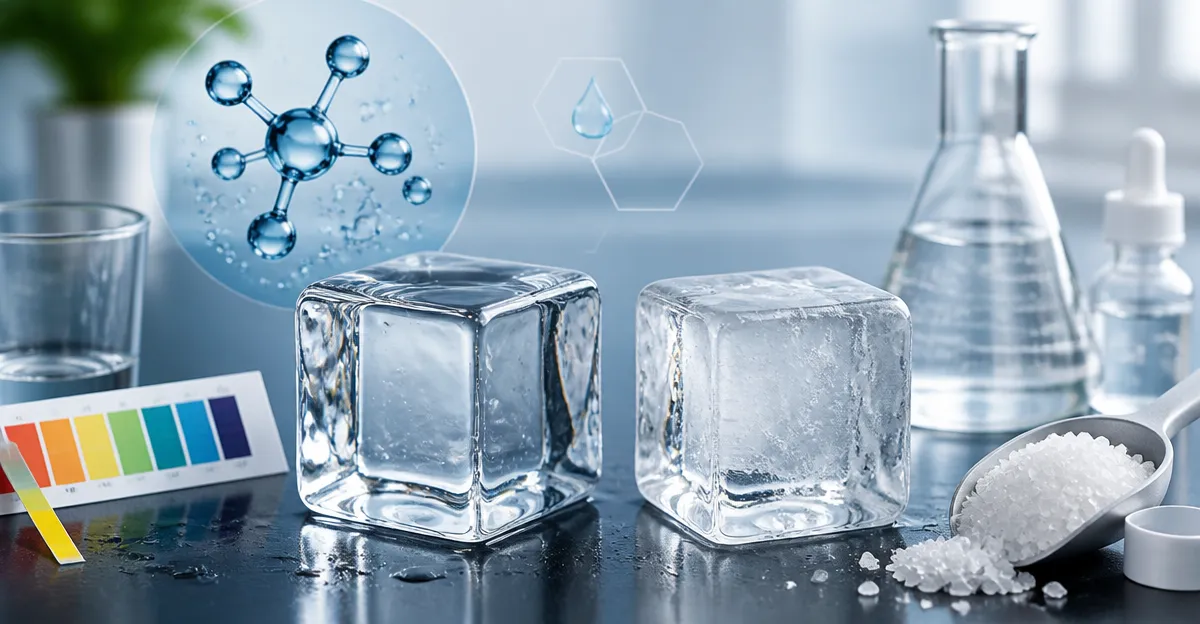
How Water pH and Hardness Affect Ice Clarity: The Complete Guide to Freezing Crystal‑Clear Ice
Introduction
Ice that appears transparent rather than cloudy is a hallmark of professional bartending and premium beverage service. This guide explains the chemical and physical mechanisms that cause cloudiness, and it provides practical steps for achieving crystal‑clear ice at home. Readers will learn how water pH, mineral hardness, and freezing techniques interact to produce clear cubes. In addition, the article recommends several high‑quality ice‑tray products that simplify the process.
Background and Context
When water freezes, dissolved gases and mineral particles become trapped within the crystal lattice, scattering light and creating a milky appearance. The concentration of calcium, magnesium, and other minerals defines water hardness, while pH measures the balance between acidic and alkaline ions. Both factors influence the size and distribution of microscopic inclusions that cause cloudiness. Understanding these concepts allows one to manipulate the freezing environment for optimal clarity.
Hard water typically contains elevated levels of calcium carbonate, which precipitates as the temperature drops. Conversely, soft water contains fewer minerals but may have a lower buffering capacity, making pH fluctuations more pronounced. A neutral pH (around 7) minimizes the formation of insoluble compounds during freezing. Adjusting pH toward neutrality can reduce the formation of iron or copper oxides that also cloud ice.
Commercial ice makers often employ directional freezing, where heat is drawn from a single surface, allowing impurities to migrate away from the visible face. Home users can replicate this effect with insulated trays, slow freezing, or pre‑filtered water. The following sections explore each strategy in detail.
Key Concepts and Strategies
1. Controlling Water pH
Water with a pH between 6.5 and 7.5 tends to produce the clearest ice because mineral solubility is balanced. If the pH is too low, acidic conditions can dissolve metal ions that later oxidize, creating dark specks. If the pH is too high, alkaline conditions may cause precipitation of carbonate compounds, leading to cloudiness. Simple kitchen methods such as adding a pinch of baking soda (to raise pH) or a few drops of lemon juice (to lower pH) can fine‑tune the water chemistry.
Testing pH with inexpensive strips ensures consistency. Adjustments should be made in small increments, allowing the water to sit for a few minutes before freezing. This practice is especially valuable when using tap water that varies seasonally.
2. Reducing Water Hardness
Hardness can be lowered by using filtered or distilled water. Reverse‑osmosis filters remove up to 99% of dissolved minerals, while demineralized bottled water offers a ready‑made solution. For those who prefer tap water, a water softener or a pitcher‑style carbon filter can reduce calcium and magnesium concentrations significantly.
When hard water is unavoidable, boiling the water before freezing can precipitate some minerals. After boiling, allow the water to cool, then carefully pour the clear top layer into the ice tray, leaving sediment behind.
3. Directional Freezing Techniques
Directional freezing encourages impurities to migrate to the bottom of the tray, leaving the upper portion clear. Insulating the sides and bottom of a tray with a cooler or a silicone sleeve forces the freezer to draw heat from the top. The result is a clear slab that can be cut into cubes.
Several of the recommended products incorporate design features that support directional freezing. For example, the ChefAide Silicone Ice Trays have removable lids that seal the surface while allowing the sides to remain exposed, promoting uniform crystal growth.
Product Recommendations
Choosing the right ice tray can simplify the pursuit of clarity. The following products were selected based on their material quality, stackability, and user‑friendly release mechanisms.
ChefAide Silicone Ice Trays with Lid
The ChefAide set includes four silicone trays, each producing 14 rectangular cubes for a total of 56 cubes per batch. The dual‑material construction combines a rigid plastic upper half with a flexible silicone base, enabling effortless release without twisting. The lids protect against freezer odors and allow vertical stacking, conserving freezer space. With a rating of 4.4 out of 5 stars from over 11,000 reviews, the trays are praised for durability and ease of cleaning. Price: $6.99.
Kitch 2‑Pack Ice Trays
Kitch’s two‑tray pack offers 32 cubes per freeze cycle. Made in the USA from food‑grade, BPA‑free plastic, the trays feature a twist‑release mechanism that balances flexibility with sturdiness. Their stackable design and dishwasher‑safe construction make them convenient for daily use. Users highlight the consistent cube size and the absence of cracks after months of use. Rating: 4.7 out of 5 stars from 12,071 reviews. Price: $12.95.
Kitch 4‑Pack Ice Trays
The four‑tray version expands capacity to 64 cubes per batch, ideal for larger gatherings. Each tray retains the same flexible‑yet‑durable construction as the 2‑Pack, with added emphasis on rapid water flow through channel‑designed wells. The product is also made in the USA, BPA‑free, and dishwasher safe. With a rating of 4.7 out of 5 stars from 16,714 reviews, it is regarded as a cost‑effective bulk option. Price: $15.45.
OXO Good Grips Ice Tray with Lid
OXO’s two‑tray set introduces a sliding lid that allows users to release a selected number of cubes while keeping the remainder sealed. The rounded cube shape reduces stress points, facilitating smooth release. The lid also prevents odor absorption, and the trays are BPA‑free and top‑rack dishwasher safe. Reviewers appreciate the innovative lid, though some note the need to avoid overfilling. Rating: 4.5 out of 5 stars from 9,537 reviews. Price: $12.89.
DOQAUS Silicone Ice Trays with Lids
DOQAUS provides four silicone trays with LFGB‑certified, BPA‑free material. The one‑push release system eliminates the need for twisting, making it accessible for users with limited dexterity. Each lid includes lift tabs for easy removal, and the trays stack neatly to maximize freezer space. With a rating of 4.6 out of 5 stars from 46,913 reviews, the product is celebrated for its vibrant colors and reliable performance. Price: $6.99.
Comparison and Selection Guide
| Feature | ChefAide | Kitch 2‑Pack | Kitch 4‑Pack | OXO Good Grips | DOQAUS |
|---|---|---|---|---|---|
| Capacity (cubes) | 56 | 32 | 64 | 48 (2×24) | 56 |
| Material | Silicone + PP | Food‑grade plastic | Food‑grade plastic | Flexible plastic | Silicone + PP |
| Stackable | Yes, with lids | Yes | Yes | Yes, sliding lid | Yes, with lift tabs |
| Ease of Release | Flex bottom pop | Twist | Twist | Slide & pop | One‑push press |
| Price (USD) | 6.99 | 12.95 | 15.45 | 12.89 | 6.99 |
For users who prioritize maximum capacity at the lowest cost, the ChefAide or DOQAUS 4‑pack options provide excellent value. Those who desire a premium release mechanism and precise portion control may prefer the OXO Good Grips tray. If American manufacturing and robust plastic construction are important, the Kitch 2‑Pack or 4‑Pack are suitable choices.
Best Practices & Tips for Crystal‑Clear Ice
- Use filtered or distilled water to minimize mineral content.
- Adjust pH to the neutral range (6.5‑7.5) with small amounts of baking soda or lemon juice.
- Boil water, let it cool, and pour the clear top layer into the tray to reduce dissolved gases.
- Freeze slowly by placing trays in the coldest part of the freezer and avoiding rapid temperature swings.
- Employ directional freezing: insulate the sides of the tray with a cooler or silicone sleeve.
- Allow ice to sit at room temperature for 30 seconds before releasing; this reduces the risk of cracking.
- Store ice in airtight containers or use trays with lids to prevent freezer odor absorption.
Frequently Asked Questions
- Why does ice appear cloudy even when using filtered water? Cloudiness can result from trapped air bubbles that did not escape before the water solidified. Slow freezing and pre‑boiling help release these gases.
- Can I use tap water if I adjust the pH? Adjusting pH alone does not remove minerals; combining pH adjustment with filtration yields the best clarity.
- Is it necessary to use a silicone tray for clear ice? Silicone trays facilitate easy release but are not required for clarity. The critical factors are water quality and freezing method.
- How many times can a silicone tray be reused? High‑quality silicone trays such as the ChefAide and DOQAUS models are rated for years of repeated use without cracking.
- What is the advantage of a sliding lid versus a removable lid? A sliding lid, as found on the OXO Good Grips tray, allows selective cube release while keeping the remaining ice sealed, reducing exposure to freezer odors.
- Do larger cubes melt slower? Yes, larger cubes have a lower surface‑to‑volume ratio, which slows melting and preserves beverage temperature longer.
- Can I freeze flavored liquids in these trays? All recommended trays are dishwasher safe and compatible with flavored or colored liquids; however, strong pigments may stain silicone over time.
Conclusion
Water pH and hardness are primary determinants of ice clarity, but they can be managed with simple kitchen techniques and the right equipment. By filtering water, adjusting pH, employing directional freezing, and selecting an appropriate tray, any home enthusiast can produce crystal‑clear ice comparable to that of professional bars. The products highlighted in this guide each address a specific need, whether it be capacity, ease of release, or American manufacturing standards. Implementing the best‑practice tips will ensure consistent results and elevate the overall drinking experience.
Products Featured in This Guide
ChefAide Silicone Ice Trays
Price: $6.99 | Rating: 4.4/5 (11,163 reviews)
Featured for its dual‑material construction, stackable lids, and affordable 4‑pack capacity that supports directional freezing.
Kitch 2‑Pack Ice Trays
Price: $12.95 | Rating: 4.7/5 (12,071 reviews)
Featured for its American‑made, BPA‑free construction, reliable twist‑release, and space‑saving stackable design.
Kitch 4‑Pack Ice Trays
Price: $15.45 | Rating: 4.7/5 (16,714 reviews)
Featured for its bulk capacity of 64 cubes, durable flexible plastic, and consistent performance for larger gatherings.
OXO Good Grips Ice Tray
Price: $12.89 | Rating: 4.5/5 (9,537 reviews)
Featured for its innovative sliding lid that allows selective cube release and its rounded cube design for easy pop‑out.
DOQAUS Silicone Ice Trays
Price: $6.99 | Rating: 4.6/5 (46,913 reviews)
Featured for its LFGB‑certified silicone, one‑push release system, and vibrant color options that add visual appeal to any kitchen.